
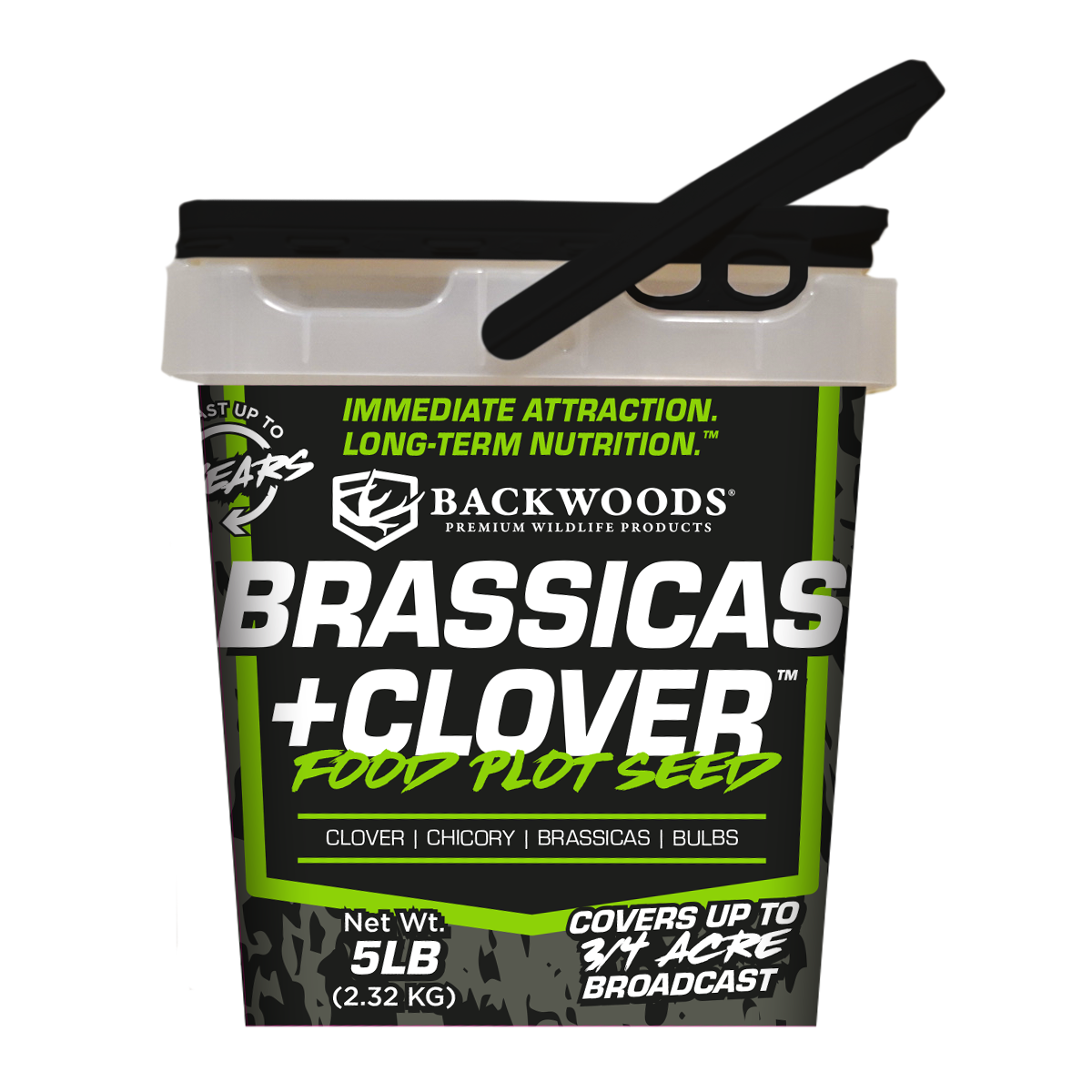
BRASSICAS + CLOVER™
TWO SEASONS. ONE PLOT.™
Brassicas + Clover™ combines fast-growing brassicas with long-lasting perennial clover to create a food plot that performs today and continues producing long after most annual plots are gone. It's the perfect choice for hunters who want immediate attraction without giving up long-term nutrition.
Perfect For
• Fall and spring food plots
• Hunters wanting one planting with extended value
• Year-round nutrition
• Building perennial food plots
• Improving hunting properties over time
• Full-sun locations
✔ Dual-Season Performance
✔ Immediate Attraction
✔ Long-Term Nutrition
✔ Proven At The Testing Grounds™

Couldn't load pickup availability
Find BRASSICAS + CLOVER™ Near You
Enter your location to see the closest dealers currently carrying Backwoods BRASSICAS + CLOVER™

BRASSICAS + CLOVER™
SIX REASONS HUNTERS PLANT BRASSICAS + CLOVER™
ONE PLANTING. MULTIPLE SEASONS OF BENEFITS.

Hunt It This Fall
Fast-growing brassicas establish quickly, producing lush forage that attracts deer throughout the fall hunting season.

Feed Deer Next Spring
As the brassicas finish, perennial clover continues growing to provide high-protein nutrition throughout spring and beyond.

Two Sources. One Plot.
Leafy brassicas provide exceptional fall forage while clover creates a dependable perennial food source that keeps producing season after season.

Year Round Nutrition
Brassicas deliver energy during hunting season, while clover supplies consistent, protein-rich forage when deer need it most for antler growth, fawning, and recovery.

Fewer Replanting Costs
Instead of starting over every season, your established clover stand continues producing after the annual brassicas have completed their lifecycle, reducing time, seed, and equipment costs.

Proven Across The South
Designed specifically for Southern hunting properties, Brassicas + Clover™ provides dependable establishment, outstanding attraction, and long-lasting food plot performance in a wide range of conditions.
IS BRASSICAS + CLOVER™ THE RIGHT CHOICE?
What To Expect
FROM FAST FALL ATTRACTION TO YEARS OF NUTRITION.
7-14 Days
Rapid Establishment
The brassicas germinate quickly, producing lush green forage that begins attracting deer early while the clover starts establishing beneath the canopy.
30-60 Days
Growing Attraction
Brassicas continue producing abundant forage, while the young clover becomes well established and prepares to carry the plot into the following seasons.
First Frost
Peak Attraction
Cool temperatures increase the palatability of the brassicas, creating excellent attraction during the heart of hunting season while the clover remains healthy beneath the canopy.
Spring
The Clover Takes Over
As the annual brassicas naturally finish their life cycle, perennial clover becomes the dominant forage, providing lush, protein-rich nutrition throughout spring and early summer.
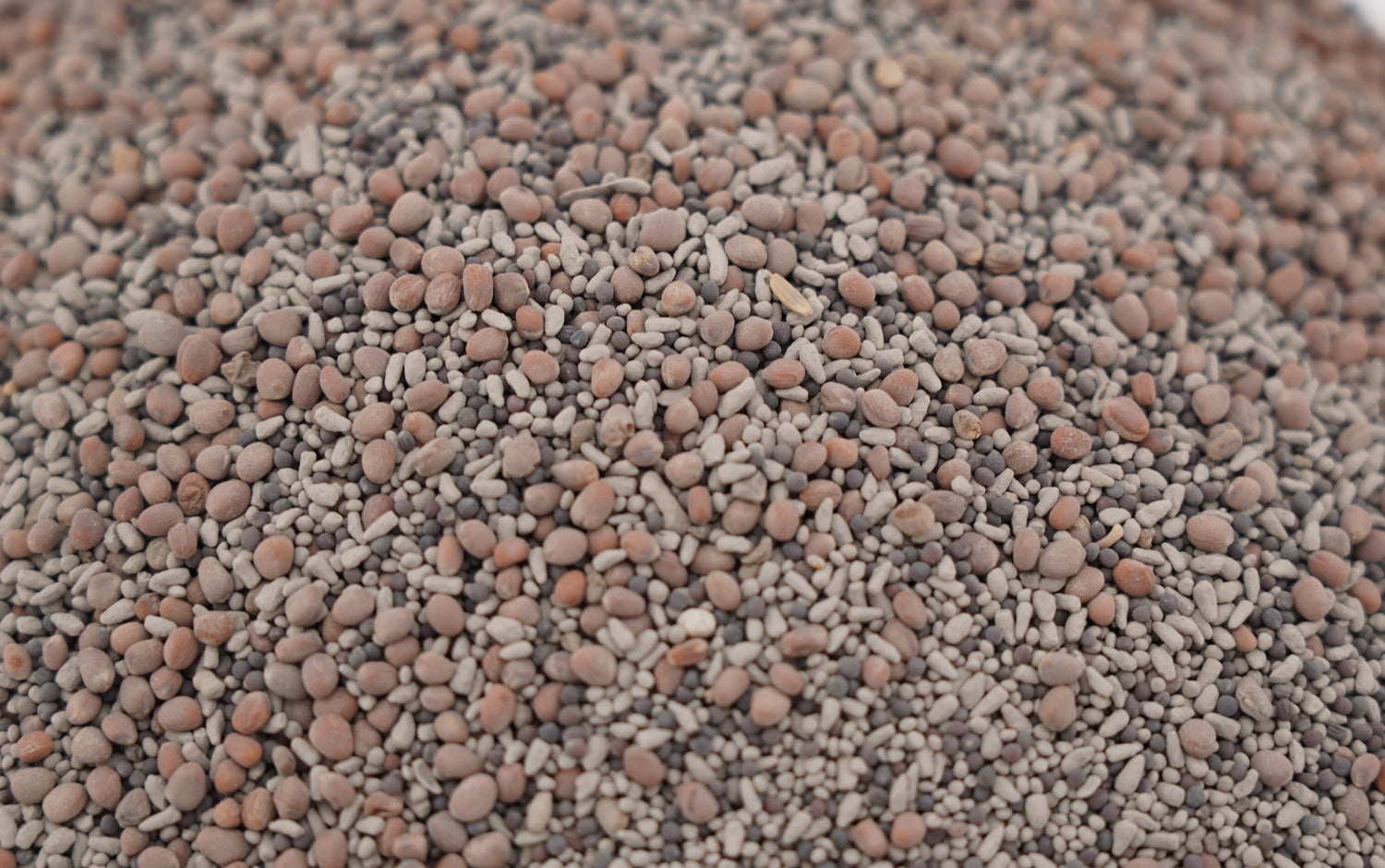
WHAT'S INSIDE BRASSICAS + CLOVER™
EVERY INGREDIENT HAS A PURPOSE
Every species was selected to perform a specific job—working together to provide fast-growing brassicas with premium perennial clover for immediate attraction and years of nutrition.

Produces highly palatable forage while deep taproots help break up compacted soils and improve future food plots.

Provides abundant leafy forage early, followed by nutritious bulbs that extend attraction after frost.

A premium perennial clover that provides exceptional protein and dependable forage for years with proper management.

Highly digestible, drought-tolerant forage that thrives alongside clover to extend production and improve plot persistence.
Two Seasons. One Plot.™
Plant At The Right Time For Dependable Fall Success.
Where & When To Plant
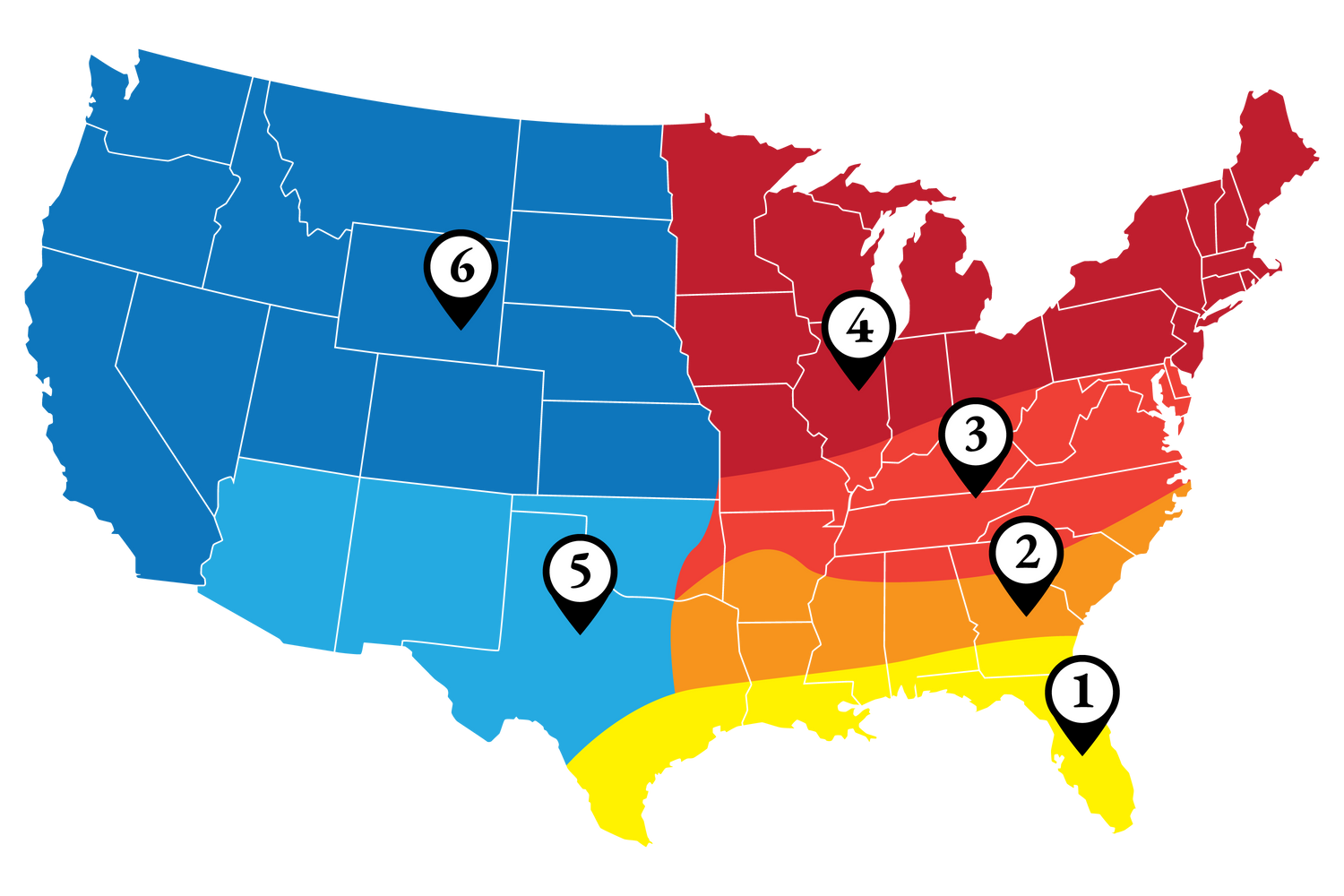
Zone 1: October - November
Zone 2: September - October
Zone 3: Late August - October
Zone 4: Mid August - Late September
Zone 5: September - October
Zone 6: Late July - August
PLANTING RULE
• Soil temperatures below 70°F and falling
• Plant 60-90 days before your area's average first frost
• Plant just ahead of a soaking rainfall
Planting windows are general guidelines and may vary by local elevation, climate, and seasonal weather conditions.
Planting At A Glance

Coverage
Up To 3/4 Acre

Planting Depth
1/4" - 1/2"

Planting Method
Broadcast or Drill

Sunlight
Full Sun

Soil Ph
6.2 - 7.0

Moisture
Moderate
Common Mistakes
✗ Planting too late before frost
✗ Skipping soil test
✗ Allowing weeds to compete during establishment
✗ Planting in heavy shade
✗ Planting too deep
✗ Skipping fertilizer
✗ Neglecting maintenance after the first year
View Full Planting Instructions
PREPARATION
Begin with a clean, weed-free seedbed by spraying or tilling existing vegetation. Remove excess residue and create a firm seedbed to ensure excellent seed-to-soil contact.
SOIL TEST & FERTILITY
Conduct a soil test whenever possible and adjust soil pH to 6.2–7.0. Apply fertilizer according to soil test recommendations. For best results, use Backwoods Fuel™ Brassicas + Clover fertilizer at planting to support both the brassicas and the establishing perennial stand.
PLANTING RATE
Broadcast (Prepared Seedbed): 7 lbs/acre
Broadcast (No-Till): 8-9 lbs/acre
Drill: 4 lbs/acre
PLANTING DEPTH
Plant ¼–½ inch deep. When broadcasting, lightly drag, rake, or cultipack after planting. Avoid burying the seed too deeply, especially the clover, which requires shallow placement for successful germination.
TIMING
Plant approximately 60–90 days before your area's average first frost, after soil temperatures have cooled below 70°F. This timing allows the brassicas to reach peak attraction while establishing the perennial clover and chicory for the following growing season.
MOISTURE
Plant into adequate soil moisture or immediately before a soaking rainfall. Consistent moisture during establishment encourages rapid germination and a vigorous stand.
ADJUSTING FOR PLS & GERMINATION
Recommended planting rates assume 100% Pure Live Seed (PLS) and 100% germination. Actual seed quality varies by lot. To determine an adjusted planting rate, divide the recommended seeding rate by the PLS percentage multiplied by the germination percentage, both expressed as decimals. Adjusting for PLS and germination helps ensure proper stand density, strong establishment, and long-term food plot performance.
Build Your Complete Hunting Program
Step 1: Build Fertility

Step 2: Plant BRASSICAS + CLOVER™

Step 3: Increase Attraction

Step 4: Supplement Your Herd

Step 5: Increase Mineral Intake

Step 6: Reliable Feed Delivery

Step 7: Spring Overseed


EVERY PRODUCT MUST EARN THE BACKWOODS® NAME.
Nothing earns the Backwoods® name until it proves itself in the field.
Every Backwoods® food plot, attractant, mineral, supplement, and feeder is developed and evaluated under real hunting conditions—not just test plots or research stations.
If it doesn't perform for us, it never reaches your property.
We don't build products to sell. We build products we trust enough to use ourselves.
Tested by hunters. Proven by deer.
At The Testing Grounds™
• Hundreds of acres evaluated
• Year-round field testing
• Real hunting pressure
• Properties in multiple regions
• Trail camera monitored
• Product performance documented
NOT SURE WHICH PLOT IS RIGHT FOR YOU?
Best Dual-Season Food Plot Blend
Best For: Hunters who want immediate fall attraction while establishing a long-lasting perennial food plot that continues producing for years.
Best Premium Perennial Nutrition Blend
Best For: Land managers focused on maximizing year-round nutrition with a premium perennial blend designed for long-term herd health.
Best Late-Season Attraction Blend
Best For: Hunters looking to maximize late-season attraction with premium brassicas that become even sweeter and more attractive after the first frost.
Ultimate Hunting Blend
Best For: Hunters wanting the highest level of annual attraction with a premium blend of peas, brassicas, clovers, chicory, sugar beets, and radishes.
Real Plots. Real Deer. Real Results.
PROVEN IN THE REAL WORLD
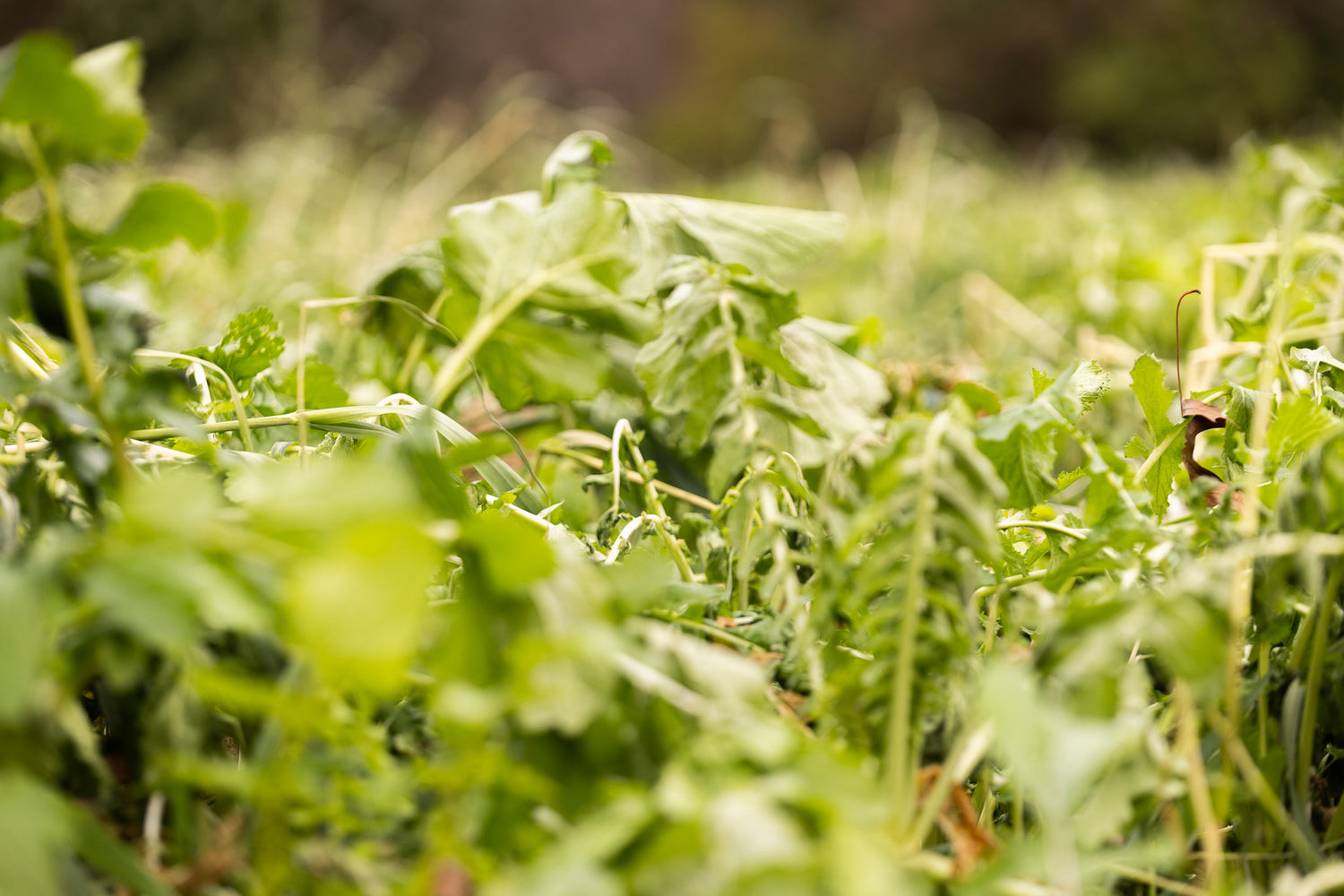
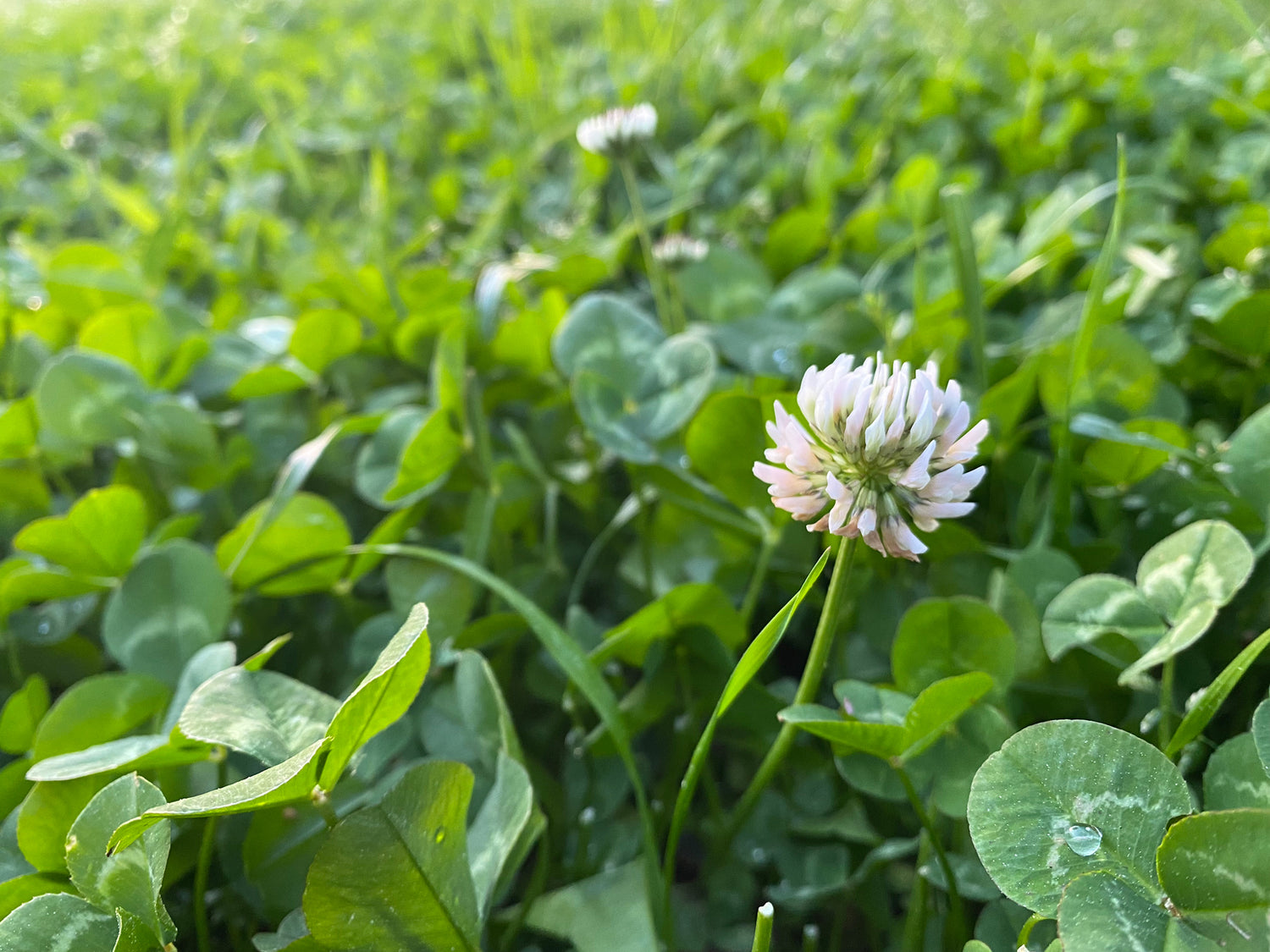
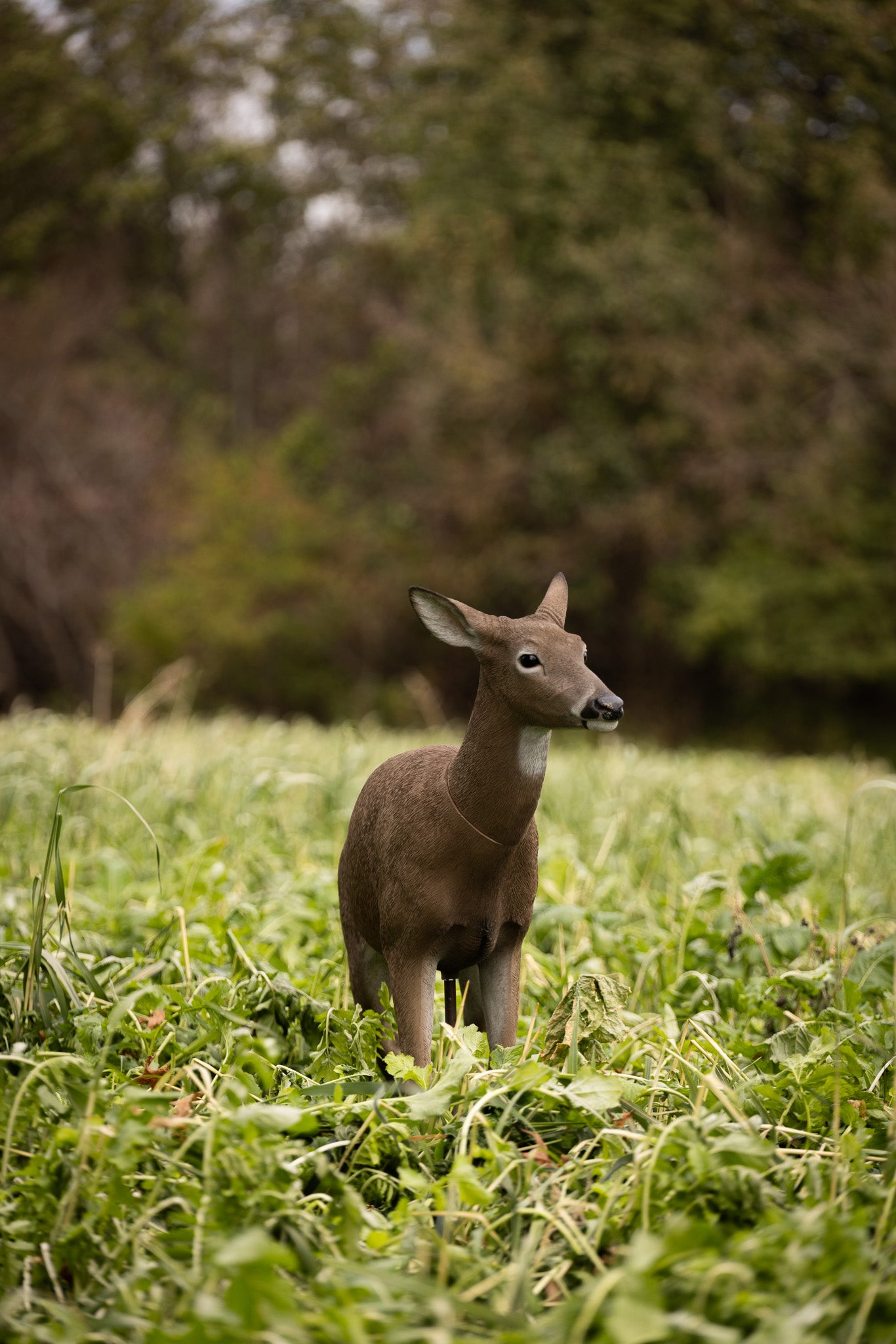
Every photo on this page comes from real Backwoods® food plots planted and evaluated at The Testing Grounds™ and on customer properties across the country. No stock photography. No staged results. Just real-world performance.
Know Before You Grow
Why combine brassicas with clover?
Brassicas + Clover™ gives you the best of both worlds. The brassicas provide fast-growing fall attraction during hunting season, while the perennial clover and chicory establish underneath and continue producing high-quality forage for years after the annual brassicas have finished.
When should I plant Brassicas + Clover™?
Plant approximately 60–90 days before your area's average first frost, once soil temperatures have cooled below 70°F. This gives the brassicas time to mature while allowing the perennial clover and chicory to
establish before winter.
Will the clover come back next year?
Yes. With proper fertility, mowing, and weed control, the perennial clover and chicory can continue producing quality forage for several years, even after the brassicas have naturally completed their life cycle.
Do deer eat the brassicas first or the clover?
Typically, deer begin browsing both as they become available, but brassicas often become even more attractive after the first
frost. As the annual brassicas decline, the perennial clover and chicory become
the primary food source.
How much sunlight does it need?
Brassicas + Clover™ performs best in full sun, receiving at least 6 hours of direct sunlight each day. Full sunlight promotes vigorous brassica growth and helps establish a strong perennial stand.
Do I need to fertilize it?
Yes. A soil test is always recommended. Applying fertilizer based on soil test results—and using Backwoods Fuel™ Brassicas + Clover at planting—helps maximize brassica production while establishing a healthy,
long-lasting clover stand.
How long will this food plot last?
The brassicas provide exceptional forage during the first fall and winter. With proper management, the perennial clover and chicory can continue producing nutritious forage for 3–5 years before renovation is
typically needed.
Can I mow the plot?
Yes. Once the perennial stand is established, periodic mowing helps control weeds, encourages fresh clover growth, and extends the productivity of the plot. Avoid mowing during periods of drought or excessive heat stress.