
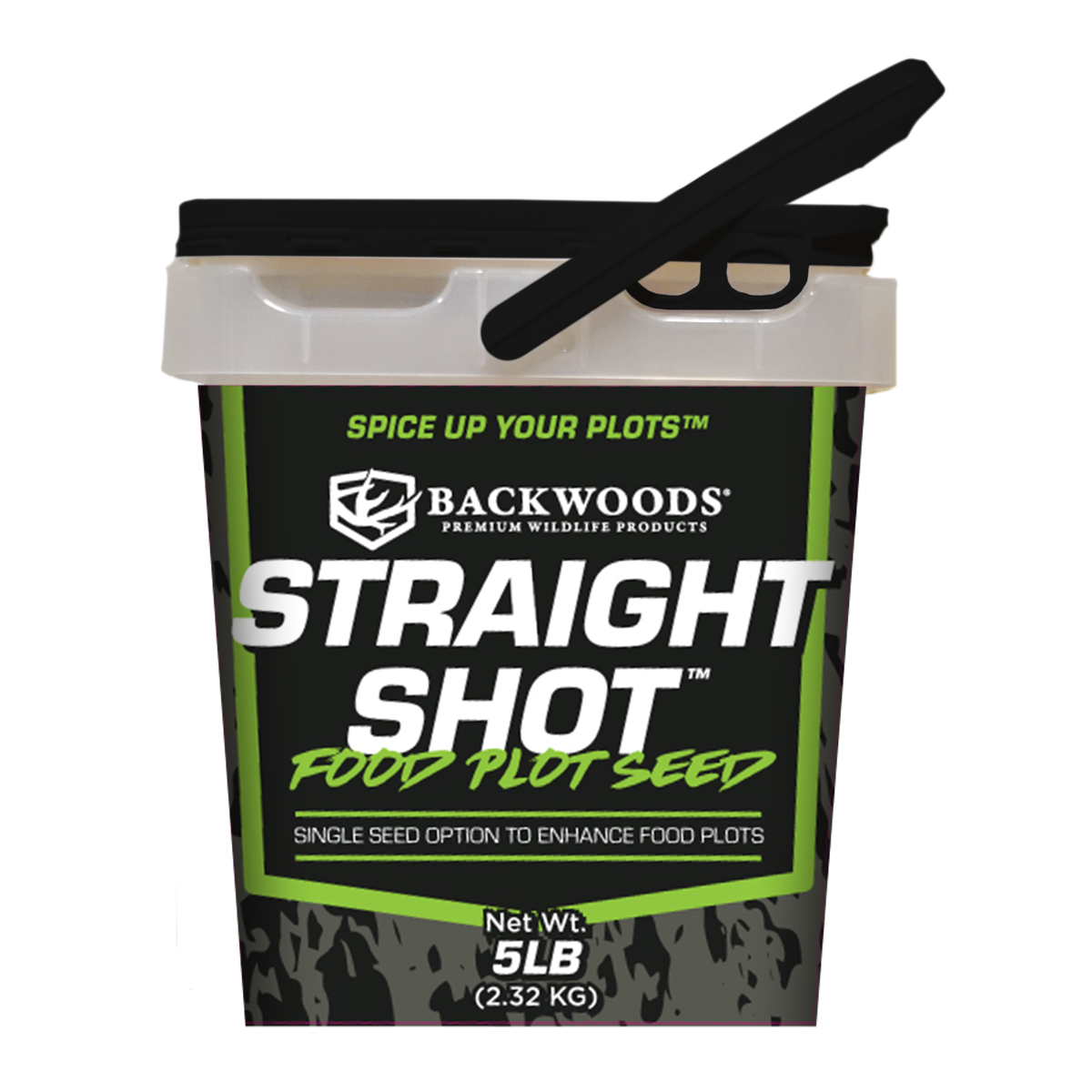
STRAIGHT-SHOT™ WHITE CLOUD CRIMSON CLOVER
SWEETER CLOVER. BETTER BROWSE.™
White Cloud™ Crimson Clover isn't just different because it blooms white. Lower levels of bitter anthocyanins help produce sweeter, more palatable forage than traditional crimson clover. Add high-quality protein, strong disease resistance, nitrogen fixation, and dependable cool-season production, and White Cloud™ gives serious land managers a premium alternative to ordinary crimson clover.
PERFECT FOR:
• High-quality cool-season forage
• Fall-established clover plots
• Strong spring production
• Cereal grain + clover combinations
• Custom annual clover blends
• Hunters wanting something different
✓ Sweeter Than Traditional Crimson Clover
✓ Improved Palatability
✓ Lower Bitter Anthocyanins
✓ High-Quality, Protein-Rich Forage
✓ Strong Disease Resistance
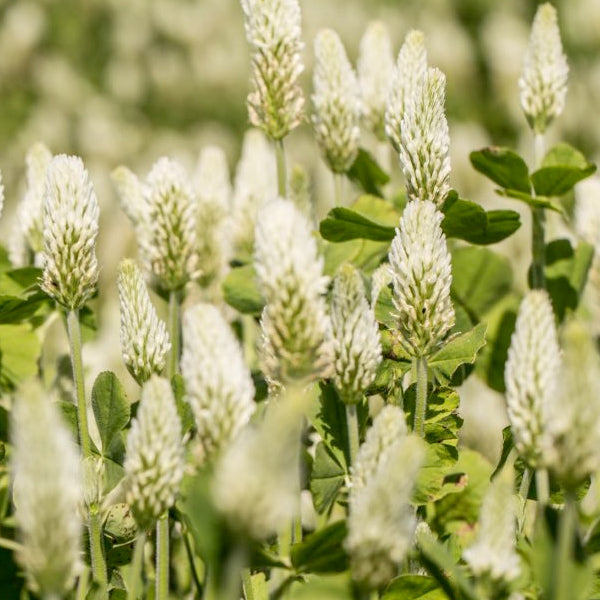
✓ Unique White-Flowering Crimson Clover
✓ Proven At The Testing Grounds™

Couldn't load pickup availability
Find STRAIGHT-SHOT™ WHITE CLOUD CRIMSON CLOVER Near You
Enter your location to see the closest dealers currently carrying Backwoods STRAIGHT-SHOT™ WHITE CLOUD CRIMSON CLOVER

STRAIGHT-SHOT™ WHITE CLOUD CRIMSON CLOVER
SIX REASONS HUNTERS PLANT STRAIGHT-SHOT™ WHITE CLOUD CRIMSON CLOVER
NOT JUST A DIFFERENT COLOR. A DIFFERENT CRIMSON CLOVER.

Improved Palatability
White Cloud™ contains lower levels of bitter anthocyanins than traditional red-pigmented crimson clover, helping produce more palatable forage for wildlife.

Sweeter Forage
White Cloud™ isn't different just because of the flower color. Its unique characteristics produce sweeter forage than traditional crimson clovers—giving hunters a meaningful forage-quality advantage.

High-Quality Deer Forage
White Cloud™ produces tender, highly palatable vegetative growth that provides valuable cool-season nutrition for whitetails.

Strong Spring Production
Establish White Cloud™ in fall and allow it to carry into spring, when warming temperatures can drive substantial vegetative growth during an important nutritional period for the herd.

Fixes Nitrogen Naturally
As a properly inoculated legume, White Cloud™ can capture atmospheric nitrogen through biological fixation, making it an excellent companion for cereal grains and other compatible food plot species.

One-Of-A-Kind Genetics
White Cloud™ is the only white-flowering Trifolium incarnatum cultivar in the United States. Its distinctive white flowers and white seed make it unlike ordinary crimson clover—but the real advantage is the premium forage behind the color.
IS STRAIGHT-SHOT™ WHITE CLOUD CRIMSON CLOVER THE RIGHT CHOICE?
What To Expect
ESTABLISH IT RIGHT.
FEED DEER FOR YEARS.
7-14 Days
Germination & Emergence
With adequate moisture, favorable temperatures, shallow seed placement, and good seed-to-soil contact, seedlings begin emerging and establishing.
30 Days
Building The Stand
Plants develop roots and vegetative growth, creating increasingly available forage as the stand becomes established.
Winter
Cold-Season Forage
Growth slows during colder periods but established plants remain positioned to provide forage and respond when favorable growing conditions return.
Spring
Strong Forage Production
Warmer temperatures drive vigorous vegetative growth and increased forage production during an important nutritional period for whitetails.
WHAT'S INSIDE STRAIGHT-SHOT™ WHITE CLOUD CRIMSON CLOVER
One Species. One Purpose.

The only white-flowering Trifolium incarnatum cultivar in the United States. White Cloud™ contains lower levels of bitter anthocyanins than traditional crimson clover, contributing to sweeter, more palatable forage while delivering high-quality nutrition, strong disease resistance, and the nitrogen-fixing benefits of a productive annual clover.
Dial It In™
Success Starts With Timing
Where & When To Plant
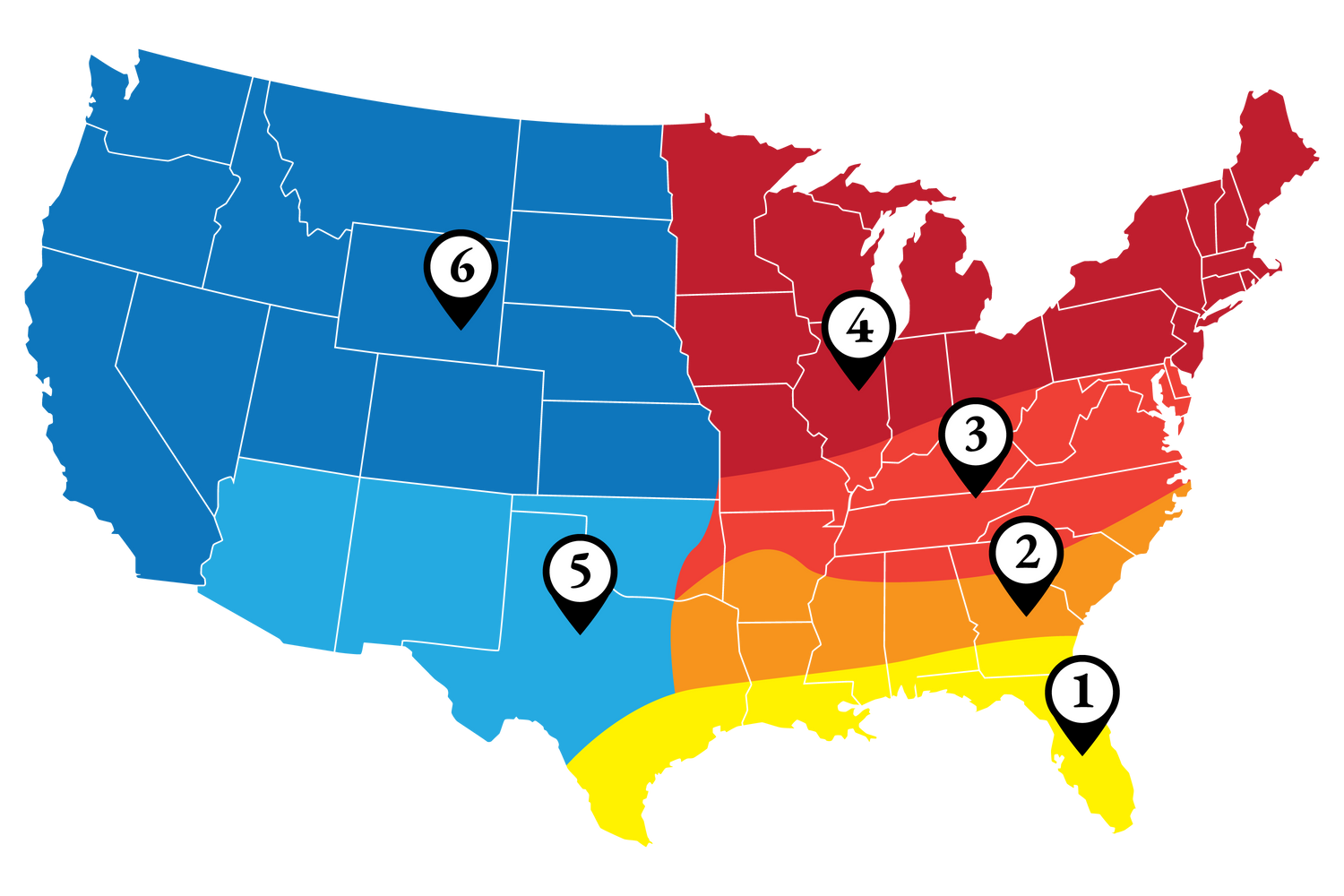
Zone 1: September - October
Zone 2: September - October
Zone 3: Late August - September
Zone 4: August - September
Zone 5: Late July - August
Zone 6: Not Recommended
PLANTING RULE
• Plant 45-60 days before your average first frost in the fall.
• Do not plant too deep
• Plant just ahead of a soaking rainfall
Planting windows are general guidelines and may vary by local elevation, climate, and seasonal weather conditions.
Planting At A Glance

Coverage
Up To 1/4 Acre

Planting Depth
1/4" or less

Planting Method
Broadcast or Drill

Sunlight
Full or Partial Sun

Soil Ph
6.0 - 7.0

Moisture
Moderate
Common Mistakes
✗ Planting too deep
✗ Skipping soil test
✗ Planting too late for adequate fall establishment
✗ Applying unnecessary amounts of nitrogen
✗ Poor seed-to-soil contact
✗ Using a full standalone rate when adding it to a blend
✗ Broadcasting onto a loose, fluffy seedbed
✗ Terminating the plot before taking advantage of spring
production
View Full Planting Instructions
PREPARATION
Start with a clean planting area by spraying or otherwise controlling competing vegetation. Prepare a smooth, firm seedbed that provides excellent seed-to-soil contact.
Small clover seed requires a firm seedbed. If your boot sinks deeply into freshly prepared soil, firm the seedbed before planting.
SOIL TEST & FERTILITY
Conduct a soil test whenever possible and correct soil pH, phosphorus, potassium, and other nutrient deficiencies according to soil-test recommendations.
Target approximately 6.0–7.0 soil pH for dependable clover performance.
Because White Cloud™ Crimson Clover is a legume, properly nodulated plants can fix atmospheric nitrogen. Avoid unnecessary heavy nitrogen applications that encourage grasses and competing vegetation.
PLANTING RATE
Broadcast (Prepared Seedbed): 25 lbs/acre
Broadcast (No-Till): 30 lbs/acre
Drilled: 15 lbs/acre
In A Blend: Reduce the rate according to companion species and desired clover population.
PLANTING DEPTH
Plant ¼ inch deep or less.
When broadcasting, spread seed evenly over a firm seedbed and cultipack or roll afterward. Avoid disking after seeding—the most common mistake with small clover seed is simply burying it too deep.
TIMING
Fall establishment is preferred. Target approximately 6–8 weeks before your area's average first hard freeze so seedlings have enough time to develop before severe winter conditions.
Spring planting may also be appropriate within suitable portions of White Cloud™ Crimson Clover's adapted range.
MOISTURE
Plant into adequate soil moisture or immediately ahead of dependable rainfall. Consistent moisture during germination and early establishment is critical for developing a uniform stand.
BLENDING & OVERSEEDING
White Cloud™ Crimson Clover is an excellent companion for wheat, oats, cereal rye, Victory™ Arrowleaf Clover, Droptine™ Balansa Clover, and Antler Chicory.
It can also be overseeded into compatible existing plots when adequate exposed soil is available. Reduce the standalone rate when adding White Cloud™ Crimson Clover to another planting.
MANAGEMENT
Manage competing vegetation and avoid excessive nitrogen applications.
Allow White Cloud™ Crimson Clover to continue growing into spring whenever possible. Its spring forage production provides valuable nutrition beyond hunting season—and allowing plants to reach maturity reveals the distinctive white blooms that give White Cloud™ its name.
ADJUSTING FOR PLS & GERMINATION
Recommended planting rates assume 100% Pure Live Seed (PLS) and 100% germination. Actual seed quality varies by lot. To determine an adjusted planting rate, divide the recommended seeding rate by the PLS percentage multiplied by the germination percentage, both expressed as decimals. Adjusting for PLS and germination ensures proper stand density and maximum forage production.
Build Your Complete Hunting Program
Step 1: Build Fertility

Step 2: Plant STRAIGHT-SHOT™ WHITE CLOUD CRIMSON CLOVER

Step 3: Increase Diversity

Step 4: Supplement Your Herd

Step 5: Increase Mineral Intake

Step 6: Reliable Feed Delivery

Step 7: Spring Overseed


EVERY PRODUCT MUST EARN THE BACKWOODS® NAME.
Nothing earns the Backwoods® name until it proves itself in the field.
Every Backwoods® food plot, attractant, mineral, supplement, and feeder is developed and evaluated under real hunting conditions—not just test plots or research stations.
If it doesn't perform for us, it never reaches your property.
We don't build products to sell. We build products we trust enough to use ourselves.
Tested by hunters. Proven by deer.
At The Testing Grounds™
• Hundreds of acres evaluated
• Year-round field testing
• Real hunting pressure
• Properties in multiple regions
• Trail camera monitored
• Product performance documented
NOT SURE WHICH PLOT IS RIGHT FOR YOU?
Best For: Sweeter, more palatable crimson clover
Best For: Fast-establishing fall clover
Best For: Winter-hardy clover + strong spring production
Best For: Long-term perennial clover
Real Plots. Real Deer. Real Results.
PROVEN IN THE REAL WORLD
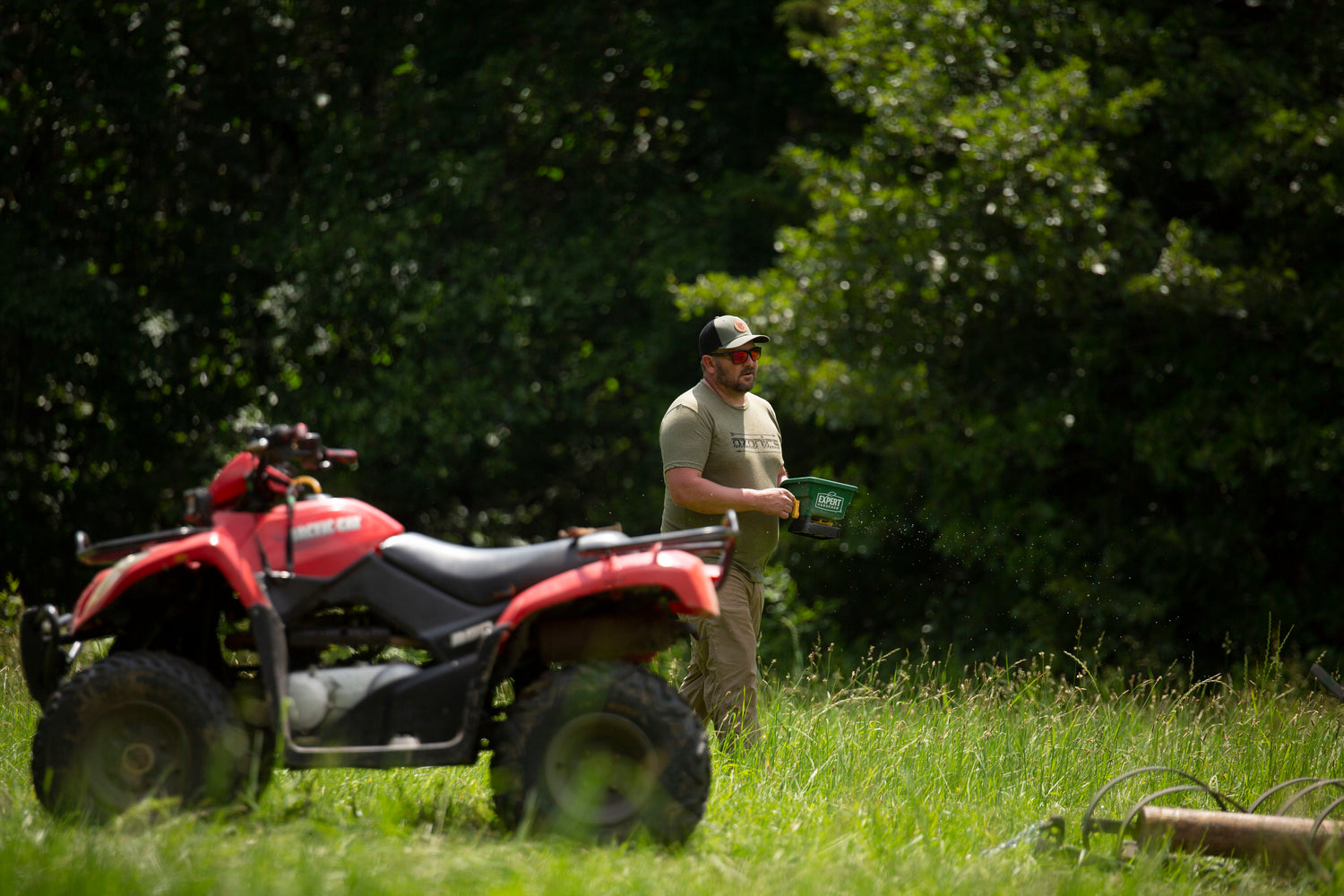
Every photo on this page comes from real Backwoods® food plots planted and evaluated at The Testing Grounds™ and on customer properties across the country. No stock photography. No staged results. Just real-world performance.
Know Before You Grow
What is Straight Shot™ White Cloud Crimson Clover?
Straight Shot™ White Cloud Crimson Clover is a premium cool-season annual crimson clover developed to provide highly palatable, high-quality forage for wildlife. Unlike traditional crimson clover, White Cloud produces white flowers and white seed and contains lower levels of bitter anthocyanins—contributing to sweeter, more palatable forage.
What makes White Cloud Crimson Clover different from regular crimson clover?
White Cloud Crimson Clover isn't simply traditional crimson clover with a different flower color. It contains lower levels of bitter anthocyanins associated with red pigmentation, contributing to sweeter, more palatable forage. It also produces distinctive white flowers and white seed and is the only white-flowering Trifolium incarnatum cultivar in the United States.
Why is White Cloud Crimson Clover sweeter than traditional crimson clover?
White Cloud Crimson Clover contains lower levels of bitter anthocyanins than traditional red-pigmented crimson clover. According to its developer, this contributes to sweeter forage and improved palatability.
What are anthocyanins?
Anthocyanins are naturally occurring plant pigments responsible for red, purple, and blue coloration in many plants. White Cloud Crimson Clover contains lower levels of the bitter anthocyanins associated with traditional crimson clover's red coloration.
Is the white flower just cosmetic?
No. The white flower is White Cloud Crimson Clover's most visible distinction, but its value goes beyond appearance. Its lack of red pigmentation corresponds with lower levels of bitter anthocyanins, contributing to sweeter, more palatable forage.
Is White Cloud Crimson Clover actually more palatable?
Yes. Improved palatability is one of White Cloud Crimson Clover's primary varietal advantages. Its developer specifically identifies White Cloud as sweeter than other crimson clovers, with lower levels of bitter anthocyanins contributing to improved palatability.
Why should I plant White Cloud Crimson Clover for deer?
White Cloud Crimson Clover combines highly palatable, protein-rich forage with dependable cool-season production, strong spring growth, nitrogen fixation, and strong disease resistance. Its sweeter forage gives hunters a legitimately differentiated alternative to ordinary crimson clover.
Is White Cloud Crimson Clover high in protein?
White Cloud Crimson Clover is identified by its developer as a high-protein forage. Actual crude protein levels will vary with plant maturity, fertility, weather, and growing conditions, so a specific protein percentage shouldn't be expected from every plot.
Is White Cloud Crimson Clover an annual or perennial?
White Cloud Crimson Clover is a cool-season annual. It typically establishes during the cool season, produces forage through its growing period, flowers and produces seed at maturity, and completes its life cycle within one growing season.
When should I plant White Cloud Crimson Clover?
White Cloud Crimson Clover can be planted in spring or late summer through early fall within its adapted range. For fall wildlife plots, establish it early enough to develop a healthy stand before sustained winter conditions arrive.
How deep should I plant White Cloud Crimson Clover?
Plant White Cloud Crimson Clover ¼ inch deep or less. Clover seed is small and can easily be planted too deep. Broadcasting onto a firm seedbed followed by cultipacking or rolling provides excellent seed-to-soil contact without burying the seed excessively.
How much White Cloud Crimson Clover should I plant?
When planted alone, we recommend 25 lbs./acre. When included in mixtures, use approximately 8-15 lbs./acre, adjusting as needed for the companion species and desired clover population.
Can I plant White Cloud Crimson Clover by itself?
Yes. White Cloud Crimson Clover can be planted alone at 25 lbs./acre when you want a dedicated stand of premium annual clover forage.
Can I add White Cloud Crimson Clover to an existing food plot?
Absolutely. White Cloud Crimson Clover is an excellent way to add high-quality legume forage and additional diversity to cereal grain and other compatible cool-season food plots.
Can I overseed White Cloud Crimson Clover?
Yes. White Cloud Crimson Clover can be overseeded into compatible existing plots where adequate exposed soil is available. Because the seed is small, good seed-to-soil contact and timely moisture are especially important.
What should I mix with White Cloud Crimson Clover?
White Cloud Crimson Clover pairs well with wheat, oats, cereal rye, Victory™ Arrowleaf Clover, Droptine™ Balansa Clover, and Antler Chicory. We recommend approximately 8-15 lbs./acre in mixtures, with the exact rate adjusted for companion species.
Will deer eat White Cloud Crimson Clover during hunting season?
Yes. Once established and actively growing, White Cloud Crimson Clover provides highly palatable forage that deer can utilize throughout the cool season. Its value also continues beyond hunting season as spring growth increases.
When does White Cloud Crimson Clover produce the most forage?
White Cloud Crimson Clover can provide forage throughout its active cool-season growth period, with production increasing significantly under favorable spring growing conditions.
Why is spring clover important for whitetails?
Spring coincides with significant nutritional demands within the deer herd. Bucks are entering antler development while does progress through late gestation and lactation. Maintaining high-quality forage into spring helps support a year-round herd-management program, not simply hunting-season attraction.
Does White Cloud Crimson Clover fix nitrogen?
Yes. As a legume, properly inoculated and nodulated White Cloud Crimson Clover can capture atmospheric nitrogen through its relationship with compatible Rhizobium bacteria.
Does White Cloud Crimson Clover need nitrogen fertilizer?
Properly nodulated White Cloud Crimson Clover generally does not require heavy supplemental nitrogen. Excessive nitrogen can encourage competing grasses and weeds. Base fertility on a soil test and pay particular attention to soil pH, phosphorus, potassium, and other deficiencies.
What soil pH does White Cloud Crimson Clover prefer?
A soil pH around 6.0–7.0 provides a strong foundation for clover performance. A soil test should ultimately determine whether lime or fertilizer adjustments are needed.
Does White Cloud Crimson Clover tolerate wet soil?
White Cloud Crimson Clover can perform across a range of suitable food plot soils but shouldn't automatically be treated as the best choice for chronically wet or poorly drained ground. If wetter or heavier soils are the primary concern, Droptine™ Balansa Clover may be the better Straight Shot™ option.
Is White Cloud Crimson Clover drought tolerant?
Established crimson clover can tolerate periods of limited moisture, but prolonged drought will reduce forage production. Adequate moisture is particularly important during germination and early establishment.
Is White Cloud Crimson Clover disease resistant?
Yes. High disease resistance is specifically identified by the developer as one of White Cloud™ Crimson Clover's key characteristics.
Is White Cloud Crimson Clover winter hardy?
White Cloud Crimson Clover has useful cool-season adaptation, but severe winter conditions can cause stand loss outside its adapted range.
Can I plant White Cloud Crimson Clover too thick?
Yes. Excessive seeding creates unnecessary competition for sunlight, moisture, nutrients, and growing space. Follow the recommended 25 lbs./acre when planted alone and reduce to approximately 8-15 lbs./acre in mixtures.
Can White Cloud Crimson Clover reseed itself?
Crimson clover can produce viable seed and naturally reseed when allowed to reach maturity under favorable conditions. Successful volunteer stands depend on seed production, weather, soil conditions, competition, and management and shouldn't be considered guaranteed.
Should I let White Cloud Crimson Clover grow after deer season?
Yes, when your management goals allow it. Carrying White Cloud Crimson Clover into spring lets you capitalize on additional forage production and eventually see the distinctive white flowers that separate it from ordinary crimson clover.
When will White Cloud Crimson Clover turn white?
The plant itself doesn't turn white. White Cloud Crimson Clover produces white flower heads when it reaches reproductive maturity.
Does White Cloud Crimson Clover have white seed too?
Yes. White Cloud Crimson Clover produces both white flowers and white seed, further distinguishing it from traditional crimson clover.
Do the white flowers make White Cloud Crimson Clover more attractive to deer?
The flower color itself isn't the reason to expect improved palatability. The important distinction is that White Cloud Crimson Clover contains lower levels of bitter anthocyanins, which its developer associates with sweeter, more palatable forage.
Is White Cloud Crimson Clover genetically modified?
No. White Cloud Crimson Clover was developed through traditional plant breeding and selection, including repeated selection for desirable characteristics. It is not a genetically engineered variety
Where did White Cloud Crimson Clover come from?
White Cloud Crimson Clover originated from a unique white-flowering plant discovered in a crimson clover production field. OreGro Research developed the variety through six cycles of recurrent phenotypic selection, ultimately creating the distinctive cultivar available today.
What's the difference between White Cloud Crimson Clover and Blood Trail™ Crimson Clover?
Both are crimson clovers, but White Cloud Crimson Clover offers a distinct premium advantage through lower levels of bitter anthocyanins, sweeter forage, improved palatability, and its unique white flowers and seed. Blood Trail™ Crimson Clover is the more traditional crimson clover option.